Health & Safety Policy for Business Waste Removal Bromley
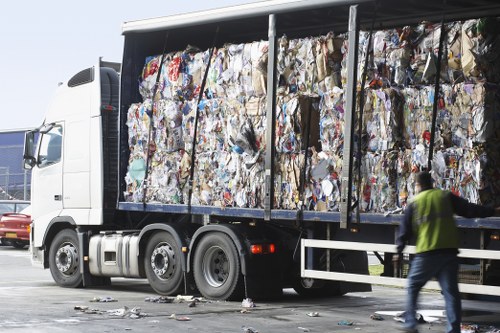
This Health and Safety policy sets out the commitment of our business waste removal operation to protect employees, contractors, clients and the public across the rubbish company service area. The policy applies to all waste collection, transfer and disposal activities undertaken on behalf of commercial customers and supports safe, compliant rubbish removal and commercial waste services. It is designed to meet statutory duties and best practice for a responsible waste removal company service area.Our primary objective is to prevent harm and minimise risk by maintaining safe systems of work, providing appropriate training and ensuring that all staff, subcontractors and visitors understand their roles. The senior management team is accountable for policy implementation and continuous improvement. This document complements operational procedures, insurance and statutory records, while reflecting the specific risks of business waste collection and skip hire within the broader rubbish disposal service area.
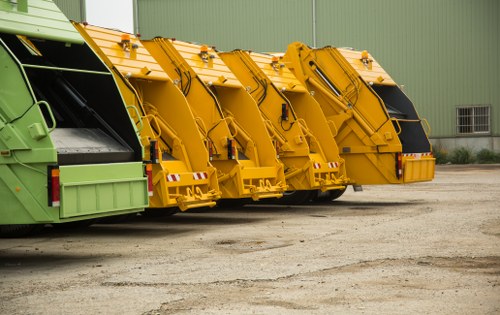 All employees have specific responsibilities: managers must conduct risk assessments and maintain records; drivers and operatives must follow safe loading, segregation and lifting procedures; office staff must ensure accurate documentation and job planning. Contractors engaged for specialist tasks must provide evidence of their own safety management. The company commits to a 'safety-first' approach that balances operational efficiency with legal compliance and the well-being of people and the environment.
Risk Assessment, Controls and Safe Systems of Work
The business undertakes routine and task-specific risk assessments to identify hazards associated with collections, transfers, vehicle movements and site activities. Control measures are implemented using a hierarchy: elimination, substitution, engineering controls, administrative controls and personal protective equipment. Risk assessments are reviewed whenever operations change or following an incident. Key areas of focus include manual handling, sharps and hazardous waste, traffic management, and loading/unloading operations in the waste collection and rubbish clearance service area.Engineering and administrative controls include vehicle stabilisation, mechanical lifting aids, clearly marked load zones, secure containment of loads, and appointment systems to avoid congestion. Job briefings are used to highlight site-specific hazards. All operational staff must confirm they understand safe procedures before starting work; supervisors will verify compliance during routine checks and on-the-road inspections.

Training, Competence and Equipment
The company provides planned training and induction covering manual handling, safe driving, hazardous waste awareness and spill response. Competence is maintained through refresher training, toolbox talks and performance checks. Where specialist handling is required, only trained personnel or accredited subcontractors are authorised to perform the task. All vehicles and lifting equipment undergo scheduled maintenance and pre-shift checks to ensure continued roadworthiness and safe operation across the rubbish removal service area.Emergency Procedures and Incident Management
Clear emergency procedures are established for incidents such as spills, vehicle collisions, fire, exposure to hazardous substances and significant injury. These procedures include immediate measures to protect people and the environment, notification of emergency services when required, and internal escalation to management. The company maintains spill kits and first aid supplies on appropriate vehicles and at depots to ensure rapid response.All incidents, near misses and dangerous occurrences must be reported promptly. Reports are investigated to determine root causes and to put in place corrective actions to avoid recurrence. Lessons learned are shared across teams through briefings and amended procedures. Where required by regulation, incidents involving waste consignments or environmental releases will be reported to the competent authority.
Safe handling practices are embedded in everyday operations and include:
- Segregation of waste types to reduce contamination and hazards;
- Use of appropriate containment and labelling for hazardous items;
- Safe lifting techniques and mechanical assistance for heavy loads;
- Controlled access and exclusion zones during vehicle loading and unloading;
- Securely covered loads and secure transport practices to prevent spillage en route within the waste removal service area.
Personal Protective Equipment (PPE) and Vehicle Safety
PPE requirements are specified for tasks and include high-visibility clothing, gloves, safety footwear, eye protection and respiratory protection where contaminants may be present. PPE is provided, maintained and replaced as needed. Supervisors ensure PPE is used correctly and that staff understand when escalation to higher-grade protection is necessary, for example when handling chemical or medical waste. The company operates a vehicle safety programme that covers driver training, route planning to minimise risk, vehicle loading guidance and daily vehicle inspections. Drivers are required to comply with legal driving and rest-hour regulations and to report defects immediately. GPS and telematics may be used to monitor safe driving practices, not to replace proactive safety coaching and supervision across our rubbish collection and commercial waste removal operations.
 Monitoring, Review and Continuous Improvement: This policy is monitored through inspections, audits and performance indicators. Management reviews the policy at least annually and after any significant incident or operational change. Continuous improvement is achieved by setting measurable targets, acting on audit findings and engaging employees in safety discussions. The company expects all staff to contribute to a positive safety culture and to follow this policy without exception.
Compliance, Legal Duties and Documentation
The business commits to comply with applicable health, safety and environmental legislation and to maintain records that demonstrate compliance. Documentation includes risk assessments, training records, vehicle maintenance logs, incident reports and waste transfer documentation. Records are retained in accordance with legal requirements and are available for inspection by authorities where requested.Scope and applicability: This policy applies to all commercial waste collection, clearance and disposal activities undertaken on behalf of clients within the defined rubbish company service area. It does not detail operational checklists, which are maintained separately, but it establishes mandatory standards and accountabilities that all personnel must follow.
Senior management endorses this policy and allocates the necessary resources for its implementation. Employees and contractors are expected to cooperate, raise concerns and participate in the continuous development of safety practices. Together, we aim to deliver safe, compliant and reliable business waste removal services across our service area while protecting health, property and the environment.
