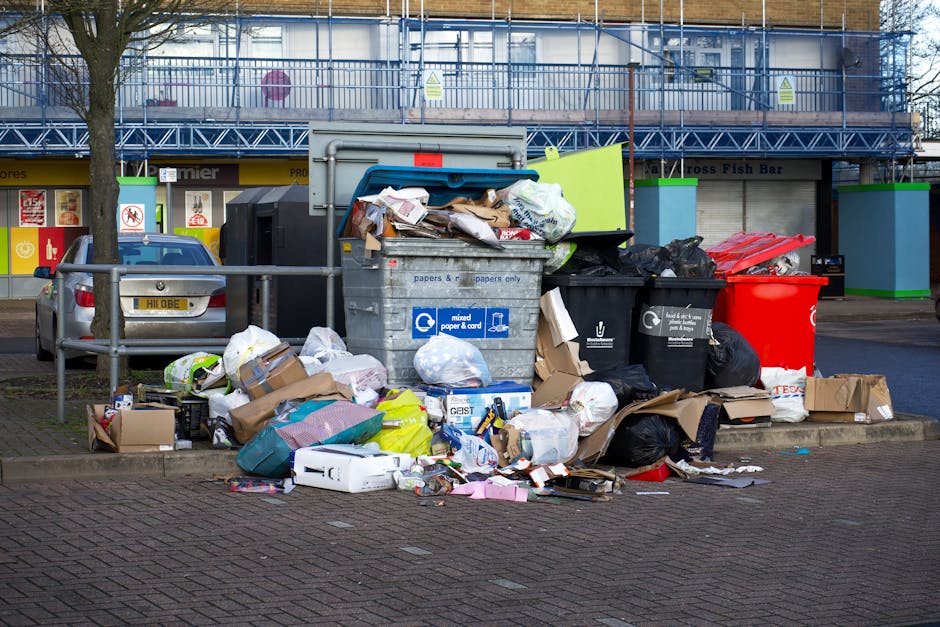
Avoid hidden fees in Bromley rubbish removal quotes: a practical guide for clear, fair pricing
If you have ever compared rubbish removal quotes and thought, "That looks fine... but what's not being said?", you are not alone. Hidden costs can turn a neat estimate into a messy bill fast. This guide on how to avoid hidden fees in Bromley rubbish removal quotes will help you spot vague pricing, ask the right questions, and choose a service with confidence rather than crossing your fingers and hoping for the best.
In real life, waste jobs are rarely just "pick it up and go". Access, item weight, labour, loading time, disposal type, and even parking can all affect the final figure. The good news? Once you know what to check, the whole thing becomes much easier to manage. And yes, you can still get a fair price without feeling like you need a detective kit.
Table of Contents
- Why avoiding hidden fees matters
- How rubbish removal quotes are put together
- Key benefits and practical advantages
- Who this is for and when it makes sense
- Step-by-step guidance
- Expert tips for better results
- Common mistakes to avoid
- Tools, resources and recommendations
- Law, compliance and best practice
- Options and comparison table
- Case study or real-world example
- Practical checklist
- Conclusion
- Frequently asked questions
Why avoiding hidden fees in Bromley rubbish removal quotes matters
Hidden fees are more than an annoyance. They can distort comparisons, make a cheap quote look expensive after the job, and leave you feeling boxed in once the team has already arrived. In Bromley, where homes range from compact flats to larger family properties with awkward access, small details can change the cost quite a bit.
Let's face it: most people do not want to spend an afternoon debating stair fees, man-and-van surcharges, or whether a "light load" suddenly became a "mixed waste" load. That is exactly why transparent pricing matters. A good quote should give you enough detail to understand what is included, what might change, and what should never appear as a surprise later.
There is also a trust angle. Clear pricing usually reflects a more organised operator. It does not guarantee perfection, of course, but it often signals that the company has thought through the job properly rather than winging it. And when a quote is vague, your risk usually goes up, not down.
One more thing: rubbish removal is often booked at stressful moments. End-of-tenancy clear-outs, renovation delays, inherited clutter, office moves, garden overhauls... these jobs often happen when you are already busy. The last thing you need is a bill that grows legs.
How avoiding hidden fees in Bromley rubbish removal quotes works
The basic idea is simple: ask for a quote that clearly explains what the price covers, then check for conditions that could alter the final bill. In practice, this means looking beyond the headline number. A proper quote should be more than a guess tossed out over the phone.
Most rubbish removal pricing is shaped by a few main factors:
- Volume - how much waste is being removed, often measured by load size or van space.
- Weight - heavier materials can cost more to dispose of.
- Type of waste - general household rubbish, furniture, appliances, garden waste, builders' debris, and specialist waste may be priced differently.
- Access - stairs, long carries, narrow hallways, restricted parking, or difficult loading points can add labour time.
- Sorting requirements - mixed loads may need extra separation or special handling.
- Disposal charges - some items have specific disposal routes or higher processing costs.
That is the honest version. A quote might start with an attractive base price, then grow if the job takes longer, weighs more, or turns out to include items that were not described clearly. Not always because anyone is being tricky, either. Sometimes the customer simply did not realise what mattered, and that gap becomes expensive.
The way to avoid that is to make the job as visible as possible before booking. Send photos. List items. Mention awkward access. Say if there are mattresses, fridges, broken tiles, paint tins, or anything else that may need special handling. A few extra minutes now can save a proper headache later.
If you want to understand the company's broader approach to quotations and billing, it can help to review their pricing and quotes information before you commit.
Key benefits and practical advantages
Transparent quotes do more than protect your wallet. They make the whole job easier from start to finish.
1. You can compare providers fairly
If one company quotes a low headline price but adds collection surcharges, while another includes everything upfront, you are not comparing like for like. Clear pricing lets you look at real value, not just the cheapest number on screen.
2. You reduce the chance of awkward add-ons
No one likes that moment where the driver says, "Actually, that's extra." A detailed quote helps prevent those surprises before they happen. Truth be told, that conversation is never fun for either side.
3. You plan your day better
When you know the likely final cost and what the service covers, you can plan around it. That matters for landlords, busy households, offices, and anyone juggling a move or a clearance deadline.
4. You get better service alignment
Clear quoting tends to go hand in hand with clearer operations. The team knows what they are collecting, what equipment may be needed, and how long the job might take. That tends to make the visit smoother. Less faff, more action.
5. You protect against unsuitable disposal choices
Some hidden fees appear when waste has to be redirected because it was not declared correctly. Being upfront about materials helps the provider use the right disposal route from the start.
Expert summary: If a rubbish removal quote is hard to understand, difficult to verify, or missing the details that affect labour and disposal, treat it carefully. A clear quote is not just about price; it is about risk control.
Who this is for and when it makes sense
This matters for almost anyone booking waste removal in Bromley, but a few groups feel the benefit most clearly.
- Homeowners clearing lofts, garages, spare rooms, or post-renovation waste.
- Tenants trying to avoid end-of-tenancy disputes or urgent move-out stress.
- Landlords and letting agents who need predictable costs and quick turnaround.
- Local businesses with office clear-outs, archive removal, or routine waste changes.
- Contractors and trades handling mixed builders' waste and site clean-ups.
- People dealing with bulky items such as sofas, wardrobes, mattresses, or white goods.
It also makes sense whenever the job has any uncertainty at all. That is usually when hidden fees sneak in. A tidy pile in a driveway is straightforward. A house with narrow stairs, a basement, or a pile of mixed waste under tarps? That is the kind of situation where the small print suddenly matters.
If your clearance is more specialised, such as a garage tidy-up or a full home declutter, it may help to look at service pages like garage clearance or home clearance to see how the job type influences the scope.
Step-by-step guidance
Here is the simplest way to avoid hidden costs without making the process complicated.
Step 1: Describe the waste properly
Start with a plain-English list of what needs removing. Include quantity, approximate size, and any awkward items. A sofa, three bags of rubble, and a broken fridge are very different from "some rubbish".
Step 2: Share photos where possible
Photos usually reduce confusion fast. A few clear pictures of the waste pile, access route, and any stairs or tight corners can help a provider assess the job properly.
Step 3: Ask what the quote includes
Do not stop at the headline figure. Ask whether the price includes loading, labour, disposal, VAT if applicable, parking, and any minimum charge. If a provider cannot explain this simply, that is worth noting.
Step 4: Ask what could change the price
This is a crucial one. A trustworthy quote should explain any likely extras in advance. For example, heavier-than-expected materials, extra volume, long carry distances, or specialist items.
Step 5: Confirm how the job will be priced on the day
Some providers price by load volume, others by job estimate, and some use a mixture of both. You do not need a finance degree, just a clear explanation of how the final figure is reached.
Step 6: Get the key terms in writing
By email or in booking confirmation, make sure the agreed scope is written down. If the quote said "two-seater sofa, one mattress, and six bags", keep that record. It helps if there is any dispute later.
Step 7: Check the final invoice before paying
Before you hand over payment, compare the invoice with the original quote. If something has changed, ask for the reason. Sometimes there is a genuine reason. Sometimes, well, things need a second look.
For people who prefer to sort things quickly, an online booking route can be useful, especially if it lets you describe the waste clearly upfront. If that suits you, have a look at book online options before you send anything off.
Expert tips for better results
Small details make a big difference with rubbish removal quotes. These are the habits that tend to pay off.
- Be specific about mixed waste. "General rubbish" and "general rubbish plus plasterboard, timber, and a broken appliance" are not the same job.
- Mention access early. If the waste is on the third floor with no lift, say so. If parking is tight on your road, say that too.
- Ask about minimum loads. Some services have minimum charges even for small jobs. Better to know before the van pulls up.
- Clarify appliance handling. Fridges, freezers, and other appliances may need special disposal arrangements.
- Check whether labour is included. Sometimes a quote sounds low because it assumes loading is minimal. That can shift if the job is more involved.
- Keep messages in one place. Email or written chat is useful because it creates a tidy record. Old-fashioned, maybe. Handy, definitely.
One practical trick: read the quote back to yourself as if you were the provider. If you would still know exactly what job is being priced, you are in good shape. If not, ask again.
For bulky household items, the service page for furniture clearance can be useful when you are working out what details to provide.
Common mistakes to avoid
Most hidden-fee problems come from a handful of familiar mistakes. The good news is that they are easy to avoid once you know them.
Relying on the cheapest headline quote
A very low price can be real, but it can also mean exclusions. If one quote is much cheaper than the others, ask why. A gap that large usually has a reason.
Describing the job too loosely
"A bit of waste" is not enough. It might sound harmless, but vague descriptions leave too much room for disagreement later.
Forgetting awkward access
Long carries, stairs, locked gates, and tight parking all matter. They affect time and labour, and they can change the final cost if they were not mentioned.
Not asking about restricted items
Some waste types need special handling or are simply outside a standard collection. If you have batteries, chemicals, paint, or specialist waste, flag it early and check the company's policy.
Assuming "all included" means everything
Those words sound comforting, but they can mean different things to different operators. Ask what "all included" actually covers. It is a small question that saves a big row.
Ignoring terms and conditions
Yes, they can be dull. No, they are not pointless. The terms often explain extra charges, booking changes, waiting time, cancellation rules, and payment expectations.
If you want to compare waste handling more broadly, you might also find the waste removal service page helpful for understanding how different jobs are framed.
Tools, resources and recommendations
You do not need anything fancy to keep quotes honest. A few practical tools go a long way.
- Your phone camera - photos of the waste, access route, and parking situation are often enough to prevent confusion.
- A simple item list - write down everything that needs to go, especially larger pieces and mixed materials.
- A note of dimensions - approximate size helps for furniture, appliances, and bulky flat-pack leftovers.
- Messages or email threads - keep the quote in writing where possible.
- Company policy pages - useful for checking payment terms, service scope, and what happens if the job changes.
For peace of mind, it can also help to review pages about payment and security and insurance and safety. Those topics do not remove the need for a clear quote, but they do give you a better feel for how the business operates.
If your waste includes reusable or recyclable material, looking at recycling and sustainability can also be helpful. A provider that explains its disposal route clearly is often easier to trust on pricing too.
And if your job is a specialist one, such as appliances, hazardous items, or builders' debris, it is better to check the exact service type rather than guess. A sofa and a fridge are not the same beast, despite both being bulky and irritating to move down the stairs at 8:15 on a rainy Tuesday.
Law, compliance and best practice
When rubbish removal is involved, there are sensible legal and industry expectations to keep in mind. You do not need to become an expert overnight, but a little awareness helps.
First, waste should be handled by a provider that follows proper disposal practice. That means taking items to approved facilities and managing different waste types responsibly. If a provider is vague about where waste goes, or overly casual about specialist items, that is a warning sign.
Second, certain materials require extra care. Hazardous waste, electrical appliances, confidential material, and items with sharp or broken parts may need specific handling. A good company should explain this clearly rather than shrugging and hoping for the best.
Third, best practice includes being honest about the job at the quote stage. That is not just a courtesy. It helps the provider send the right vehicle, enough staff, and any necessary equipment. It also lowers the chance of "unexpected" charges that were actually avoidable.
For waste-heavy jobs, it is reasonable to expect a company to talk plainly about what it can and cannot collect. Pages such as hazardous waste disposal, fridge and appliance removal, and builders waste clearance can help you understand service boundaries before you book.
Finally, if you are dealing with household clear-outs that include personal data or sensitive documents, use proper shredding or secure disposal methods rather than tossing everything into the same pile. A little care here saves trouble later.
Options and comparison table
When you are trying to avoid hidden fees, it helps to understand the common quote styles. Different pricing models suit different situations.
| Quote style | How it usually works | Good for | Watch out for |
|---|---|---|---|
| Fixed quote | A set price based on the described job | Clear, well-defined collections | Can change if the job details were incomplete |
| Load-based quote | Price depends on how much space the waste takes | Mixed jobs and variable volumes | Volume estimates can be tricky if photos are poor |
| Site-assessed quote | Quoted after viewing the waste in person | Large, awkward, or complex clearances | Needs time to arrange, and the quote may still depend on final scope |
| Estimate with extras | Starting price plus add-ons for access, labour, or disposal type | Jobs with some uncertainty | Ask exactly which extras may apply |
In practice, the best option is the one that matches the complexity of the job. A small garden tidy-up may not need a site visit, while a cluttered loft with narrow access might benefit from one. If a quote sounds too simple for a complicated job, be cautious.
That is why service-specific pages can be useful. For example, loft clearance or garden clearance give you a better sense of what details matter most for each type of job.
Case study or real-world example
Picture a Bromley homeowner clearing a spare room after a renovation. There is an old wardrobe, two broken chairs, packaging, a bag of mixed waste, and some plasterboard offcuts. On the phone, the owner says, "It's just a small pile."
The first quote looks low. Nice and tidy. But when the crew arrives, they discover the pile fills more van space than expected, plus the plasterboard needs separate handling. The access is through a narrow side passage, and there is limited parking. The final price rises, and the homeowner is frustrated because the original estimate never captured the real job.
Now compare that with a better approach. The owner sends a few photos, lists the items, mentions the side access, and asks whether plasterboard affects pricing. The quote comes back a bit higher than the first one, but it already includes the likely complexity. No awkward conversation. No surprise. Just a job done properly.
That is the whole game, really. Clarity up front tends to be cheaper than confusion later.
We see the same pattern with office clear-outs, too. A business may think it has "just a few desks and boxes", then remember old monitors, a broken fridge in the kitchenette, and a locked storage room full of archived files. The more complete the picture, the smoother the price and the collection.
Practical checklist
Use this before accepting any Bromley rubbish removal quote.
- Have I described the waste clearly and specifically?
- Have I sent photos of the waste and access route?
- Do I know whether the price includes labour, loading, and disposal?
- Have I checked whether VAT, parking, or congestion-related costs could apply?
- Did I mention stairs, long carries, or difficult parking?
- Have I flagged any special items such as appliances, hazardous materials, or confidential waste?
- Did I ask what would count as an extra charge?
- Is the quote in writing?
- Do the booking terms match what I was told?
- Have I compared at least two quotes like for like?
If you can tick most of those off, you are in a much better position. Not perfect, maybe, but far safer. And honestly, that is enough to stop most of the expensive surprises.
For businesses or sensitive clear-outs, pages such as office clearance and confidential shredding can help you narrow down the right service before asking for a quote.
Conclusion
Avoiding hidden fees in Bromley rubbish removal quotes is mostly about asking better questions, sharing better information, and refusing to rely on vague promises. The cheapest number is not always the best value, especially if it leaves out labour, access, disposal, or special handling.
When you compare quotes properly, the job becomes calmer, cleaner, and far less stressful. You know what is included. The provider knows what to expect. And the whole thing tends to run more smoothly because nobody is making assumptions in the dark. That is usually where the trouble starts.
Get a free quote today and see how much you can save.
If you want to keep things tidy from the start, take a moment to review the company background on the about us page and the contact us page for the easiest way to ask clear questions before booking.
Clear quotes bring peace of mind. And in a busy week, that is worth a lot.
Frequently Asked Questions
What should a rubbish removal quote in Bromley include?
A good quote should clearly state what waste is being removed, whether labour and loading are included, how disposal is priced, and what could change the final amount. If the quote is just a single number with no explanation, ask for more detail.
Why do some rubbish removal quotes look cheap at first?
Some quotes appear cheap because they exclude access issues, heavier items, disposal charges, or minimum load costs. A low headline price can still be fair, but you need to check exactly what is included.
How can I tell if a rubbish removal quote has hidden fees?
Look for vague wording, missing details, unclear terms, or reluctance to explain extras. If the provider cannot say what would change the price, that is usually a sign to be cautious.
Should I send photos before getting a quote?
Yes, if possible. Photos help the provider estimate volume, access, and item type more accurately. That often reduces the risk of surprise charges on the day.
Do stairs or difficult access affect the price?
They can, because they change how long the job takes and how much labour is needed. Always mention stairs, narrow hallways, long carries, lifts that are out of service, or tricky parking.
Is a fixed quote better than an estimate?
Not always. A fixed quote is often useful for straightforward jobs, while an estimate may be better for larger or less predictable clearances. The key is understanding how the final price could change.
Can bulky items lead to extra charges?
Yes. Large items such as sofas, wardrobes, mattresses, fridges, and builders' waste may require different handling or disposal routes. That is why item descriptions matter so much.
What should I ask before booking rubbish removal?
Ask what is included, what might cost extra, how the final price is calculated, whether disposal charges are covered, and whether the quote is based on the photos or on-site assessment. Simple questions, but very useful ones.
Are online quotes reliable?
They can be, especially if you give detailed information and photos. They are most reliable when the job is clearly described and the provider confirms the assumptions behind the price.
What if the job changes on the day?
If the scope changes, the price may change too. That is why it helps to agree the job in writing and update the provider before collection if you remember extra items. Nobody enjoys last-minute additions, but it is better to be honest and sort it early.
Do I need to read the terms and conditions?
Yes. It may not be thrilling reading, but the terms usually explain cancellation rules, payment expectations, and possible extra costs. A quick scan can save a lot of hassle later.
How do I get the most accurate quote possible?
Be specific, send photos, mention access issues, list special items separately, and ask what could change the price. The more complete the information, the more accurate the quote is likely to be.